

“I Chose to Be an American”: Ayn Rand’s Immigration Story
100 years ago, Ayn Rand came to America in pursuit of her highest ambitions


In 1940, Ayn Rand was speaking to a crowd in New York City about politics in America. A heckler interrupted her, yelling: “Who are you to talk about America? You’re a foreigner!”
Rand turned to him and answered: “That’s right. I chose to be an American. What did you do, besides having been born?”1
The crowd cheered, and the heckler retreated.
There’s a rich history behind Rand’s choice to be an American, resulting from years of philosophical reverence for America’s history, art, and values.
February 19, 2026, marks the 100th anniversary of Ayn Rand’s immigration to America. Atlas Shrugged, The Fountainhead, and the rest of her work would not have existed if she hadn’t been able to immigrate. The story of her challenging journey highlights how that almost didn’t happen.
Rand fled her native Russia in 1926 because she could not live under the brutally oppressive policies of the Soviet regime. Evidence housed in the Ayn Rand Archives, and from her own work and interviews, reveals that she didn’t want to go just anywhere to escape her home country — she specifically wanted to come to America. She would later refer to America as “the greatest, the noblest and, in its original founding principles, the only moral country in the history of the world.”2
Soviet Russia was precisely the opposite.
Soviet Russia: No Home for an Ambitious Writer
Alisa Zinovyevna Rosenbaum was born in pre-revolutionary St. Petersburg, Russia, on February 2, 1905, to Anna Borisovna Rosenbaum and Zinovy Zakarovitch Rosenbaum (she adopted the name “Ayn Rand” after arriving in America).3 Rand later described her family as “middle to upper-middle class.”4 Her father was a successful pharmacist and businessman who owned both the pharmacy and the building it occupied.5
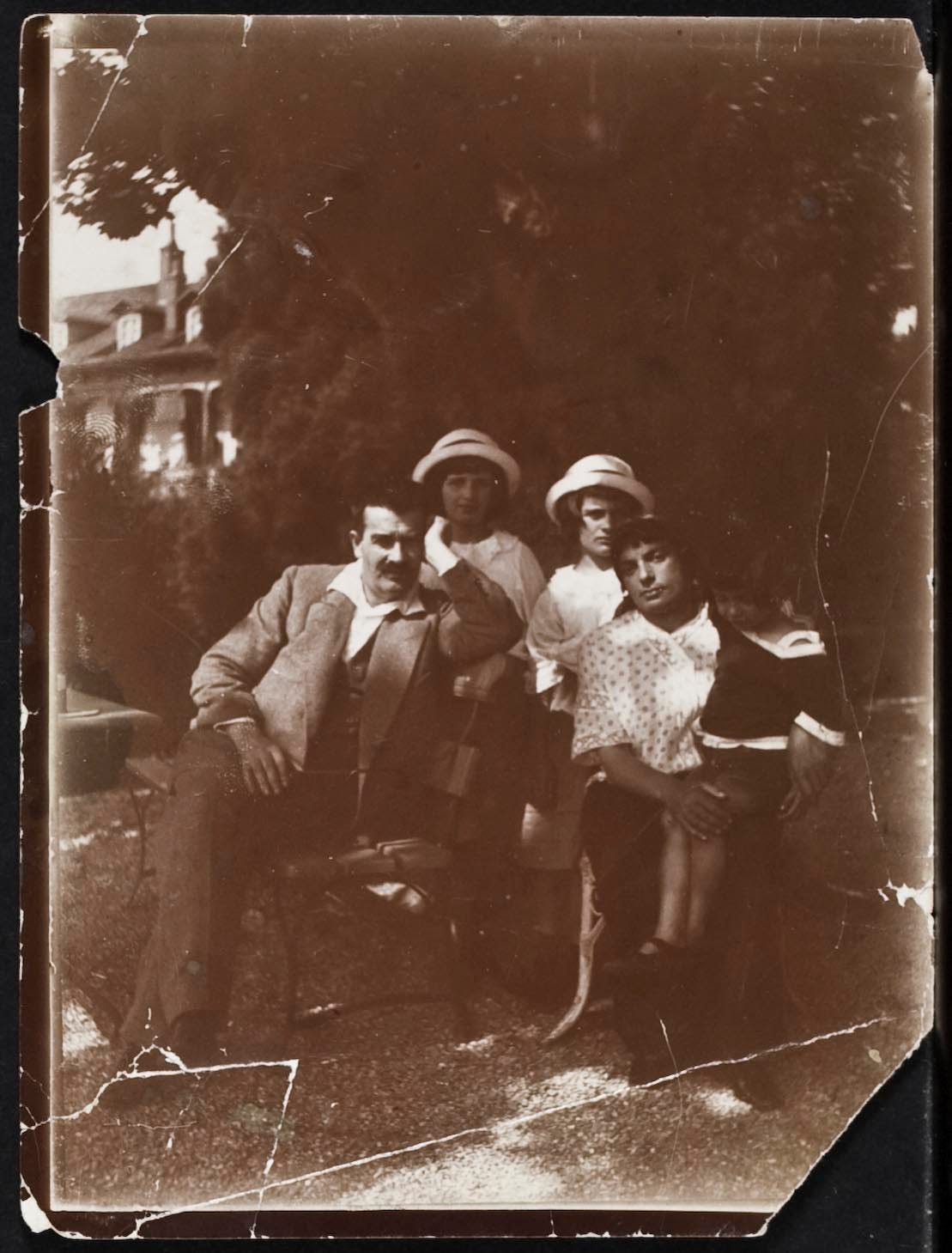
The Rosenbaums’ comfortable lives were destroyed by the Bolshevik Revolution of 1917. Anticipating upheaval, Zinovy withdrew what savings he could and sold the family’s jewelry, enabling them to survive through the difficult years ahead.6 His pharmacy was confiscated and closed when private businesses were abolished by the new Soviet government.7 With the nationalization of banks, members of their extended family had assets seized.8
In 1918, the family fled St. Petersburg — now Petrograd — enduring banditry on their journey to Crimea, a refuge of anti-Soviet Russians during the ensuing civil war.9 Even there, they experienced periods of hunger and disease as the town they lived in changed hands multiple times during the conflict.10 When the Soviets emerged victorious a few years later, the family returned to a Petrograd filled with ration cards, political informers, and university purges.11
Before all this, at the age of nine, Rand had decided to become a fiction writer, seeking to dramatize life as it “might be and ought to be”: not mediocrity, but the exceptional — not the average, but the heroic.12 She summarized this attitude in a 1945 letter to her readers: “I could summon no interest or enthusiasm for ‘people as they are’ — when I had in my mind a blinding picture of people as they could be.”13
In a 1960 biographical interview, Rand recalled that her stories in the years immediately after the revolution were political in nature, noting that they focused on individualistic, idealistic heroes “fighting either against communists or against some king.”14 Such stories about revolutions against oppressive regimes could be perceived as seditious.15 The Soviet state, historians have noted, enforced strict censorship and ideological control over literature, theater, and film.16 Looking back, Rand estimated that if she had remained in Soviet Russia writing such stories, she would likely “be dead within a year.”17
With every passing year of her young life, Rand better understood the condition of Soviet Russia. Even prior to the revolution, she regarded the country as “a cesspool of civilization” — hardly a climate where her art could thrive.18 But as she realized the depressing state of Russia, she also began discovering a bright faraway country that would stand in her mind in stark contrast with Soviet Russia: the United States of America.
“Like Going to Mars:” Discovering Freedom Abroad
Even before the Russian Revolution, Rand recalled having the impression that her future lay abroad, expressing an admiration for England and Switzerland from an early age.19 She had grown up reading French literature and had learned to speak the language from her governess.20 Rand could also read German and had a cousin living in Berlin.21 She could have tried to move elsewhere on the European continent and might have lived a decent life if she had done so. But for someone like Rand, who sought the exceptional, there was only one choice that made sense: coming to America.
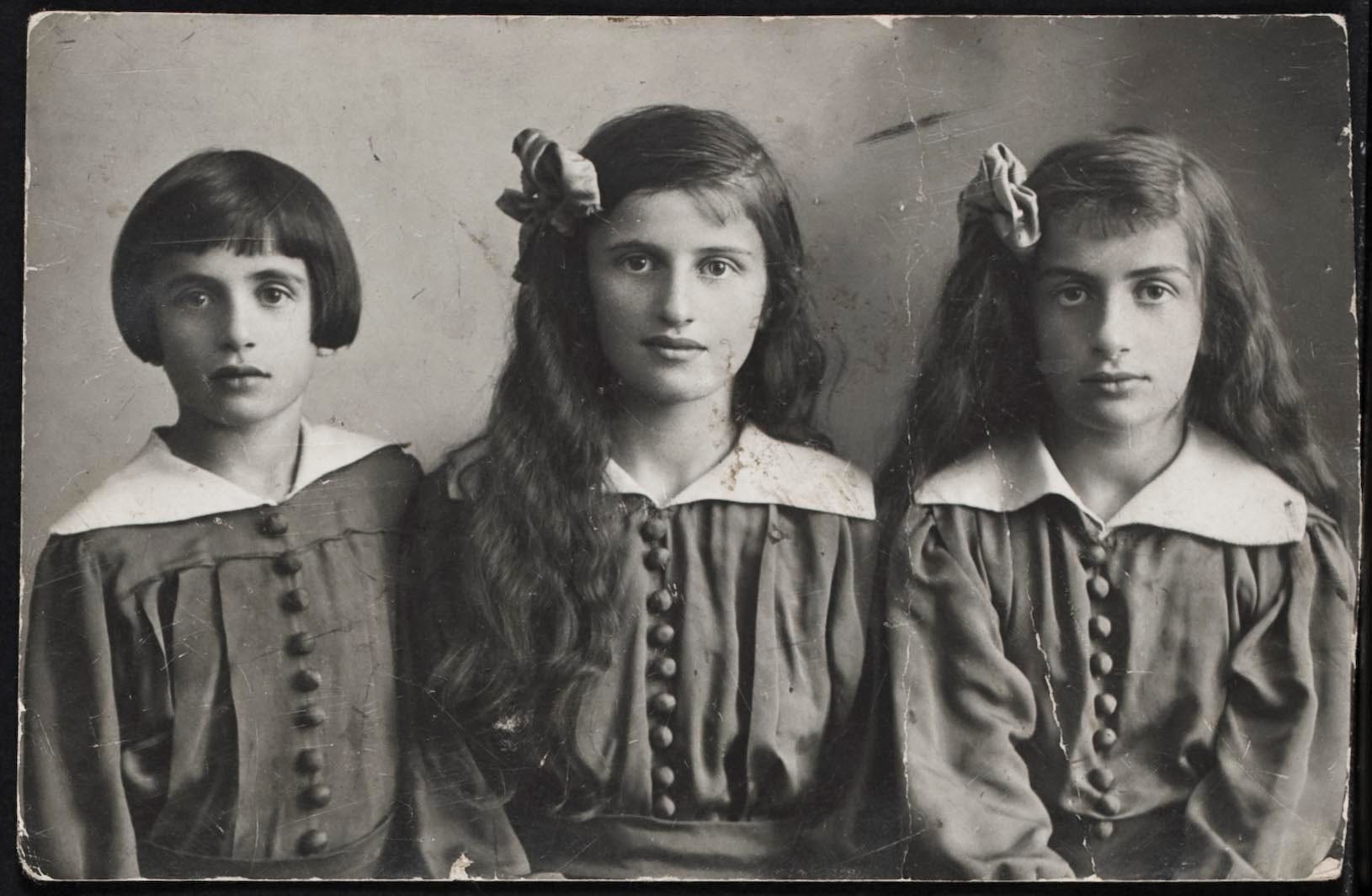
Rand was introduced to American history in high school, and learned about the country’s history, including the Declaration of Independence and the Constitution.22 At that time, however, she didn’t regard immigrating to America as a “serious possibility.”23 It was a country on the other side of the world, so far removed from a Russian’s context, she recalled, that it was “like going to Mars.”24
The turning point came between 1923 and 1925 when she began to regularly consume American movies.25
As a student at the Russian Cinema Institute, she recalled, “I remember there were some American movies where you could see New York, just shots, usually long shots, and I would sit through two shows just to catch it. . . . It seemed completely incredible.”26
New York represented America, and America became, in Rand’s mind, the only place where she could live the life she wanted. She conceived of the American skyscraper as “the symbol of achievement and of life on Earth,” in stark contrast with Soviet Russia.27 Over the next two years, Rand sought anything that would serve as a window to America — particularly the films of Cecil B. DeMille and Milton Sills.28
The fiction that Rand wrote in this period reflected her increasing love for the U.S. In one story, written approximately in 1923, she envisioned a scenario where the greatest minds of Europe all fled from the rise of collectivism, seeking refuge in America.29
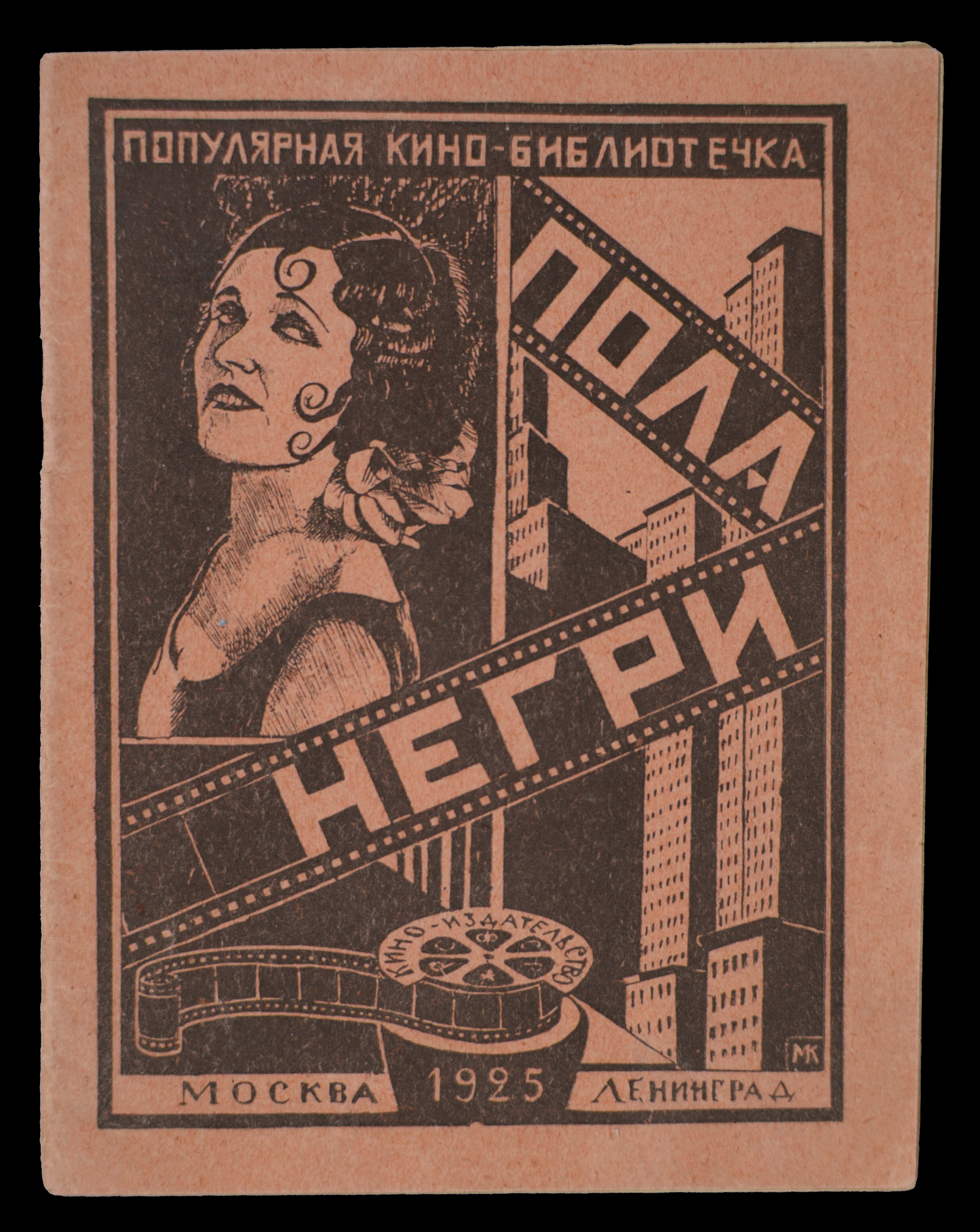
This admiration also extended to Rand’s first published nonfiction work. In 1925, she wrote a pamphlet about the Polish actress Pola Negri, who had immigrated to Hollywood in 1921, becoming one of the biggest silent film stars of her day. For Rand, Negri likely served as a living example of the kind of success and happiness that was possible for artists in the United States.30
By 1925, Rand was fully determined to leave Russia behind forever and make a new life for herself on the other side of the world.31
The Journey Across the Ocean
Zinovy had reservations about Rand traveling alone to a country where she couldn’t even speak the language (she would not become fully fluent until she moved to America).32 Still, her family supported the decision to leave.33 They knew of her admiration for the United States and her ambition to live there someday. That support took many forms: Rand’s parents paid her travel expenses and sent money to her while she was in America.34 Throughout the documented family correspondence, they affectionately referred to Rand as “the American resident,” and a family cat was named “Los Angeles.”35
Leaving the USSR was laborious and unpredictable because permission to leave was dispensed so arbitrarily.36 Rand recalled that it was nearly impossible to know what forces were at play in the minds of Soviet officials, as approvals to exit the country were granted seemingly at random, and sometimes the doors would completely slam shut.37
Her mother, Anna, corresponded with relatives in Chicago, in the hopes that they’d host her daughter so she could receive a travel visa to see her relatives.38 According to Rand, the Soviets granted her a six-month passport to do this.39 At a farewell party, a family acquaintance was once purported to have told her: “If they ask you, in America — tell them that Russia is a huge cemetery and that we are all dying slowly.”40
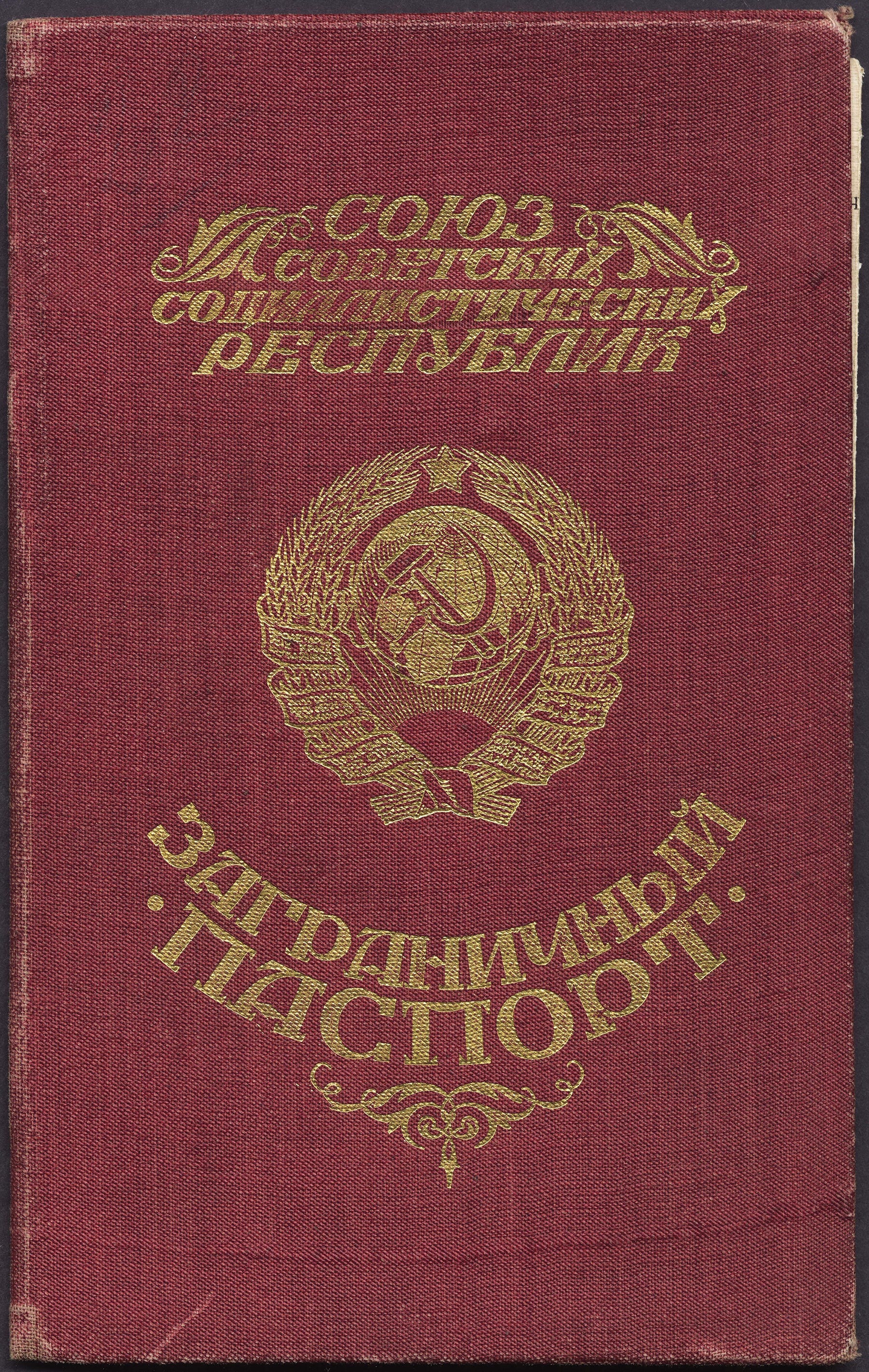
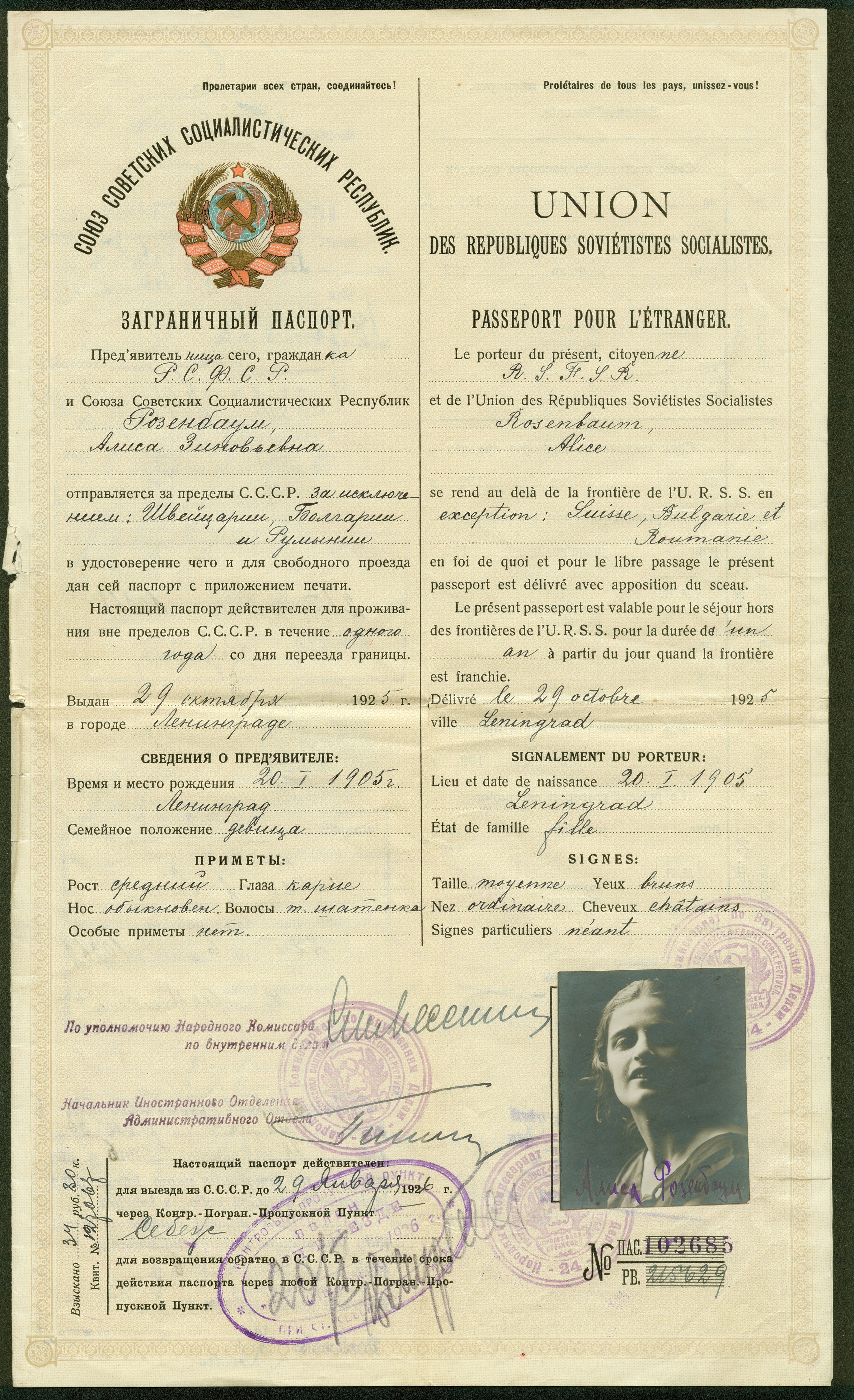
If Russian authorities hadn’t granted Rand permission to leave, she recalled in the 1960s, she might have tried to escape illegally.41 But, Rand said, “I’m not too sure I would have tried illegally,” given its challenges.42 In those 1960–61 interviews, Rand stated that if forced to stay, she might have tried writing subtly anti-Soviet movie scenarios with double meanings, but “I would have been dead within a year, that’s for sure.”43
Immigrant stories often begin with goodbyes, and Rand’s was no exception. She left her home city on January 17, 1926, and bid farewell to her mother and father.44 Anna later wrote to her in a letter: “You are gone. When you were standing on the balcony of the train, and the train’s commandant separated you from us, you were so miniature, slim, young and pretty. . . . You loudly called out to us, ― by the time I return, I’ll be famous.”45
Anna would tell her in the same missive that when Zinovy got home, he said, between sobs: “Alisa will show the world who she is.”46
Although she now had a Soviet passport, Rand still faced a daunting challenge: obtaining permission from American immigration authorities.
The challenge came from the passage in 1924 of the first wide-reaching federal immigration law: the Johnson-Reed Act. It imposed national-origins quotas — generally 2 percent of each nationality’s U.S. population in 1890 (the Western Hemisphere was exempt).47 It also created visa requirements: immigrants and visitors could not enter America without a U.S. consular visa.48
Procuring a visa was arduous. The U.S. did not recognize the USSR until November 16, 1933, so immigrant visas for Soviet visitors were handled through posts in neighboring countries.49 Russia’s immigrant visa quota was tight (2,248 per year), so Rand could be rejected even if she fit the requirements.50
On or around January 27, 1926, Rand interviewed at the U.S. embassy in Riga, Latvia, to apply for her visa.51 She recalled that if she didn’t receive the visa, she was told she would be “arrested immediately and shipped back” to Russia.52
In order for her visitor visa to be approved, Rand needed to convince the American embassy official that she didn’t plan on staying in the U.S.53 Just as she was willing to break Soviet law to get out, she also misrepresented the facts to the official: she claimed that she did not intend to stay in the United States because there was a young Russian man that she would “probably marry.” There was no such engagement.54 The official told her that he was about to reject her application, but this information swayed his decision, and he granted her permission to enter the United States.55 A bureaucrat’s whim could have dramatically changed the course of Rand’s life.
After years of admiring America and dreaming of the New York City skyline, Rand finally had in her hands what was one of the most important pieces for solving the puzzle of her immigration to America: her visa.
She would later describe walking out of the embassy with the American visa as “the great moment of my life,” in which she felt like she was “walking on air.”56
“Tears of Splendor:” The Arrival in New York
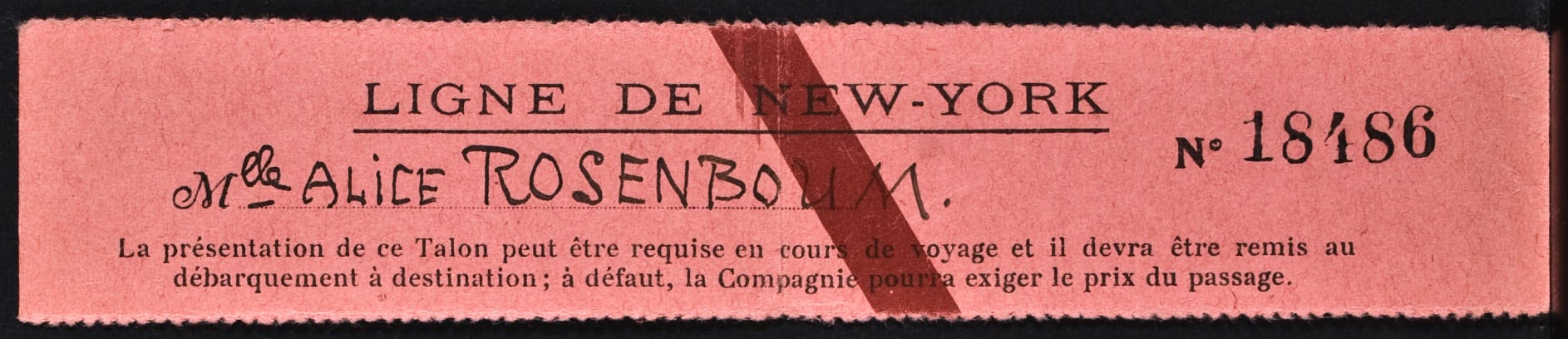
From there, she traveled westward to Berlin, staying briefly with a cousin before continuing to Paris, and, finally, to Le Havre, France, where she embarked for America.57
Rand arrived in New York on February 19, 1926, after nine days crossing the ocean.58 She would recall that she saw her first lighted skyscrapers while walking off the pier from her ship: “It was snowing, very faintly, and I think I began to cry, because I remember feeling the snowflakes and the tears sort of together, not really crying, but, you know, just strictly emotion.”59
Mary Ann Sures, a close friend of Rand, later recalled talking to Rand and her husband about this moment: “I asked what those tears were for. Her husband, Frank O’Connor, answered: ‘They were tears of splendor.’ And Ayn nodded in agreement.”60 Rand had dreamed of someday going to America, but getting there was “a distant ideal.”61 She would later relate that “going to America . . . was literally for all of us [her family] like going to Mars.”62
Leaving one’s birthplace, no matter how oppressive, often weighs heavily on immigrants and their families, and this was the case for the Rosenbaums, too. Letters from her mother soon after her departure revealed their agony at being apart and the uncertainty of whether they would ever see each other again. In this case, they never would.
In a letter mailed February 21, 1926, Anna wrote:
This is the first letter that I am writing in a non-panicky state since you left. In all your letters you write that you wished you could have been here so as to see our reactions to your news of the consul’s giving you permission to go. But if you had wanted to see real joy, an undiluted joy, you should have seen us yesterday when your telegram arrived.63
She was referencing the fact that she didn’t know whether Rand had survived the long trip across the ocean, and was ecstatic upon hearing from her daughter again over a week later.
Despite their pain over Rand’s absence, the family supported her ambition to seek a new life in America. Her mother wrote to Rand shortly after departing: “When you are in America . . . don’t hide from people, be lively, learn dances, and don’t forget that the whole of Leningrad is looking at you. Be gay always, remember that America has been your dream that had seemed forever unattainable.”64
Rand lived with her relatives in Chicago for six months before continuing on to the mecca of American movie-making: Hollywood.65 She arrived in Los Angeles on September 3, 1926.66
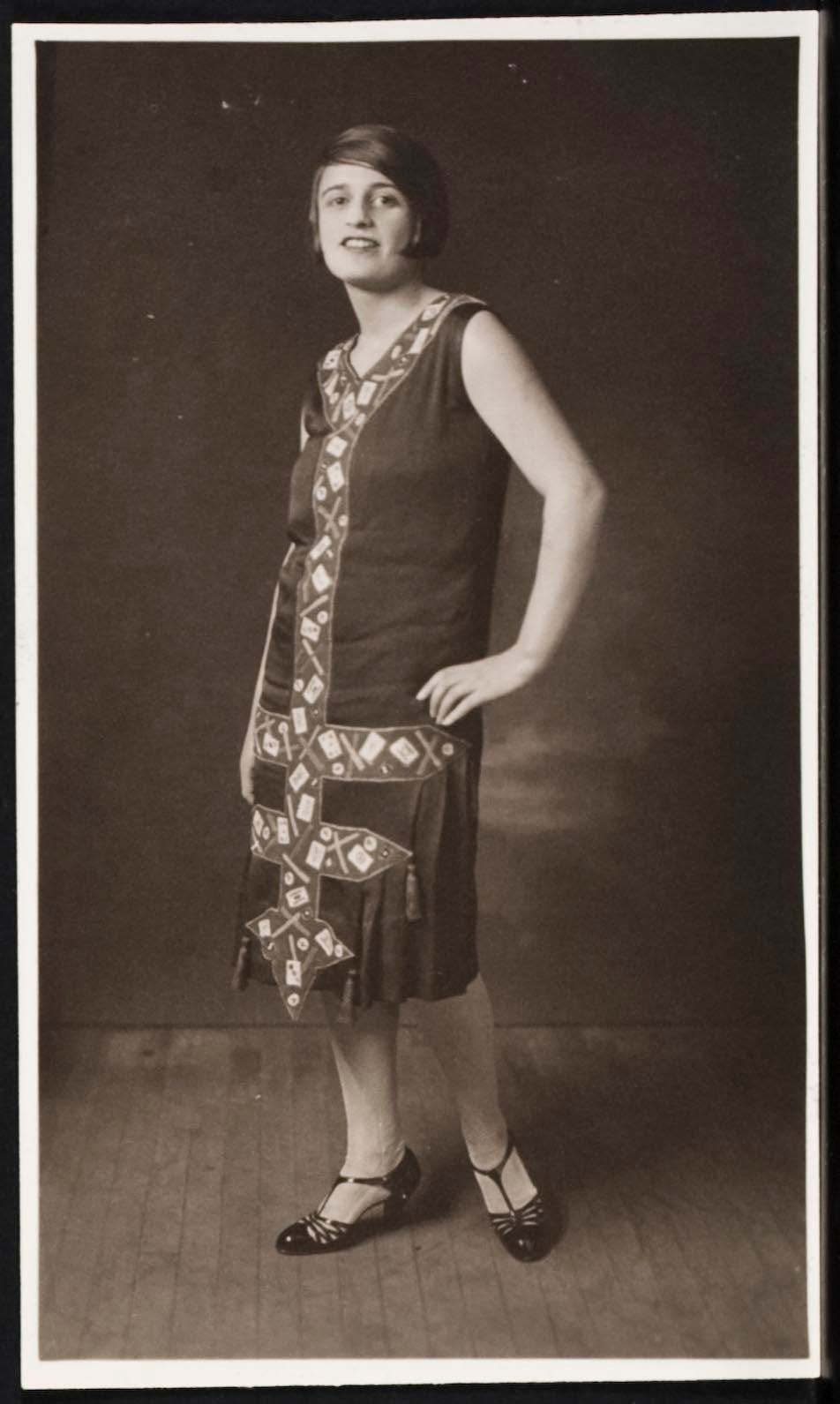
She wanted to meet Cecil B. DeMille, one of the most successful American directors.67 According to her movie diary, she first began watching DeMille’s films in 1924 while she was living in Russia, and later referred to him as “my particular idol of the American screen.”68
Rand eventually secured an interview with the publicity department at DeMille’s studio in Culver City, but was told that there weren’t any jobs for her at the moment.69 As she was leaving the studio lot, she randomly encountered DeMille himself.70 She told the director of her ambition to work as a writer, and he invited her to work as an extra on his current film: The King of Kings.71 Several months later, he hired her as a junior screenwriter and tasked her with developing scenarios for films.72
The job with DeMille didn’t last, so Rand struggled to make ends meet for some time. Throughout her early career, which was full of ebbs and flows, she still found opportunities for work and held various odd jobs. She even tried waitressing, but was fired on day one; at a different restaurant, she later recalled, she managed to last “a whole week.”73
She eventually worked stuffing envelopes, selling magazine subscriptions (of which she sold one, as she later recalled), and the first “real job” she got was as a filing clerk in the wardrobe department at the RKO movie studio.74 Rand was slowly achieving what she had set out to do in America: rise as far as her hard work and ambition would take her. Her brush with fame would eventually help her forge the career path she dreamed of: as a writer.
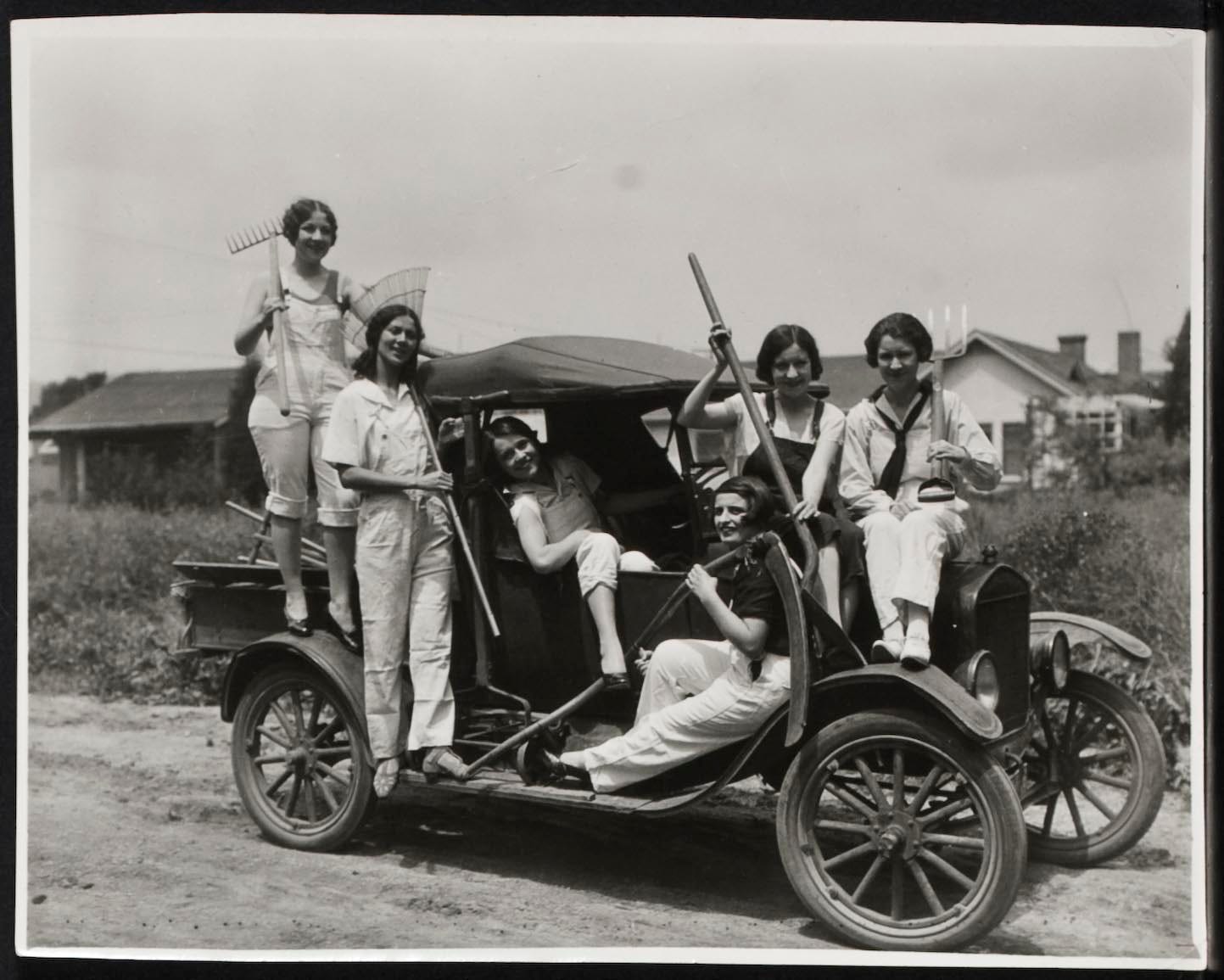
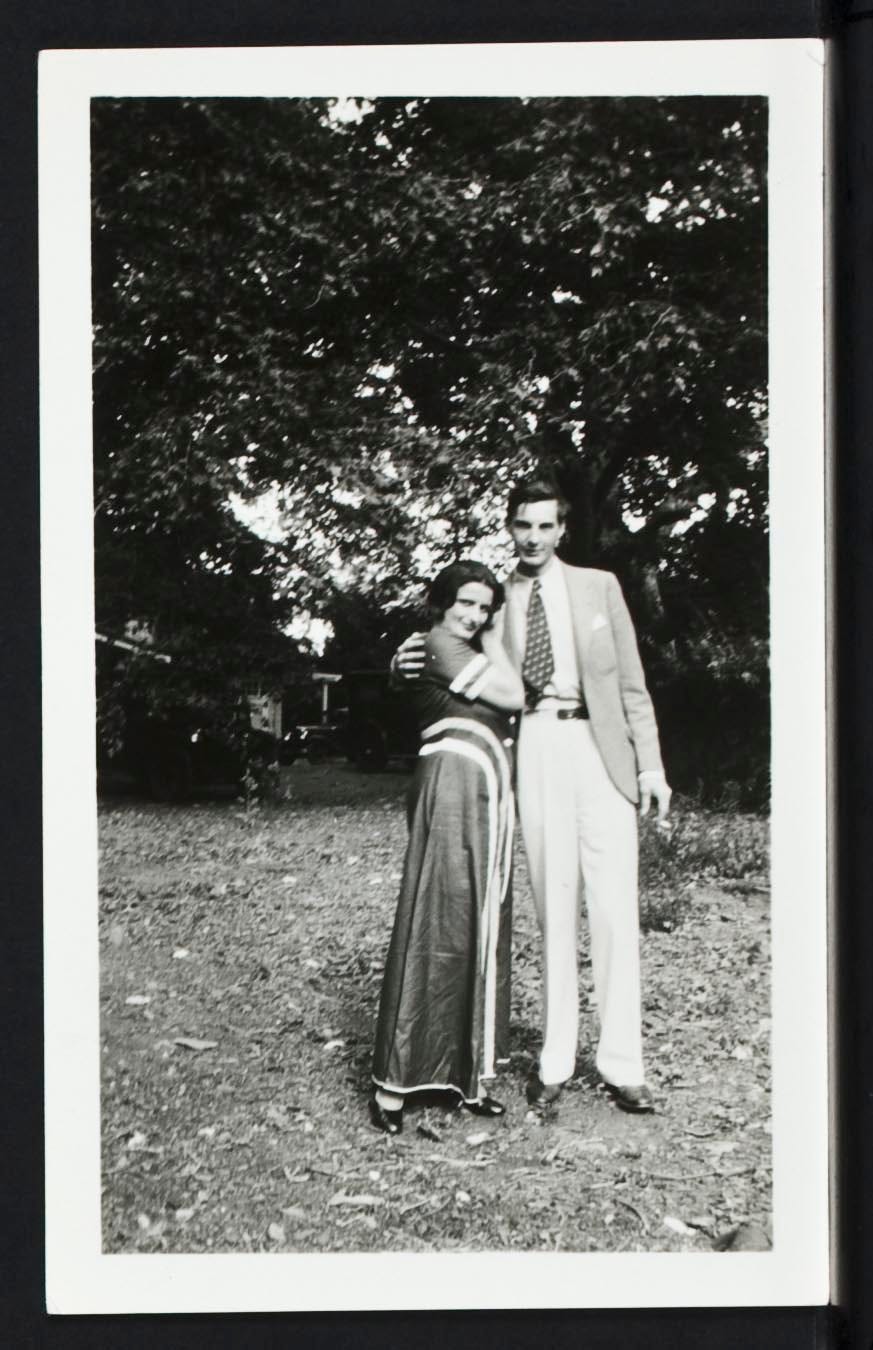
Another consequential outcome of her early Hollywood years was meeting actor Frank O’Connor on the set of The King of Kings — the start of a love story that would last for more than fifty years.75
Becoming an American
In early 1929, about two years after meeting O’Connor, Rand’s final visa renewal was nearing expiration, per her own account.76 Though she and Frank had decided at some point earlier that they would get married, to remain in the United States she would have to take immediate legal steps.
Years later, Rand recalled that she did not want to stay illegally in the U.S. and had decided against advice to circumvent the immigration laws: “I was far-sighted enough to say: ‘Someday I will be famous, and it will matter, and it will be discovered, and I don’t want to stay here illegally,’” she stated.77 She would also explain that her visitor visa had been renewed three times between 1926 and 1929.78
Other than Rand’s testimony in the biographical interviews, there is no documented evidence in the Ayn Rand Archives of her visa renewals. The immigration regulations at the time make it implausible that an extension would have been granted for a total of three years — from 1926 to 1929, when she married Frank O’Connor and obtained legal permanent residency.79 However, immigration enforcement was scattered and arbitrary at the time, and the lack of paperwork in the Archives of the renewal she recalled years later doesn’t mean it never existed. Therefore, it is unclear whether Rand fell out of immigration status.
But Rand did work at numerous jobs — such as movie extra, junior screenwriter, and waitress — without government permission. Her visa did not permit her to work in America. Although in the 1920s the government was expanding its power to decide who is permitted to work, the legal landscape and enforcement were significantly different from today. Employers now are expected to ask about an individual’s employment eligibility and to document it (e.g.: millions are required to use E-Verify), with financial and other penalties for hiring ineligible individuals. But unlike today, employers in the 1920s were not expected to check an individual’s permission to work. So there’s little reason to think this issue came up in the many jobs Rand held prior to becoming formally eligible to work. Moreover, given her moral and political ideals, we believe she would have repudiated such a government prohibition on engaging in voluntary, productive work — and the requirement to disclose employment in a visa renewal.80
Immigration regulations forced Ayn and Frank to move forward their wedding date in order to qualify for permanent residency. Rand expressed years later that she didn’t remember when or if Frank had made a formal marriage proposal, but they had taken for granted that they “would have been married anyway.”81 As she put it, Frank simply said: “Well, we’ll get married.”82
On April 15, 1929, Ayn Rand married Frank O’Connor, an act that she later described as a shotgun wedding, “with Uncle Sam holding the shotgun.”83
Rand was required to leave the United States and reenter under her new legal classification as the wife of an American citizen. The couple traveled together to Mexicali, Mexico, stayed overnight, and reentered the U.S.84 Rand applied for her permanent residence, based on marriage on June 28, 1929, as shown in an affidavit accompanying her application.85 It contained a statement saying: “my purpose in going to the United States is to live.”86 Though this was standard bureaucratic phrasing, it was poetic in the context of the life of the woman who would later write We the Living (about a Russian young woman’s quest to live free from Soviet tyranny).
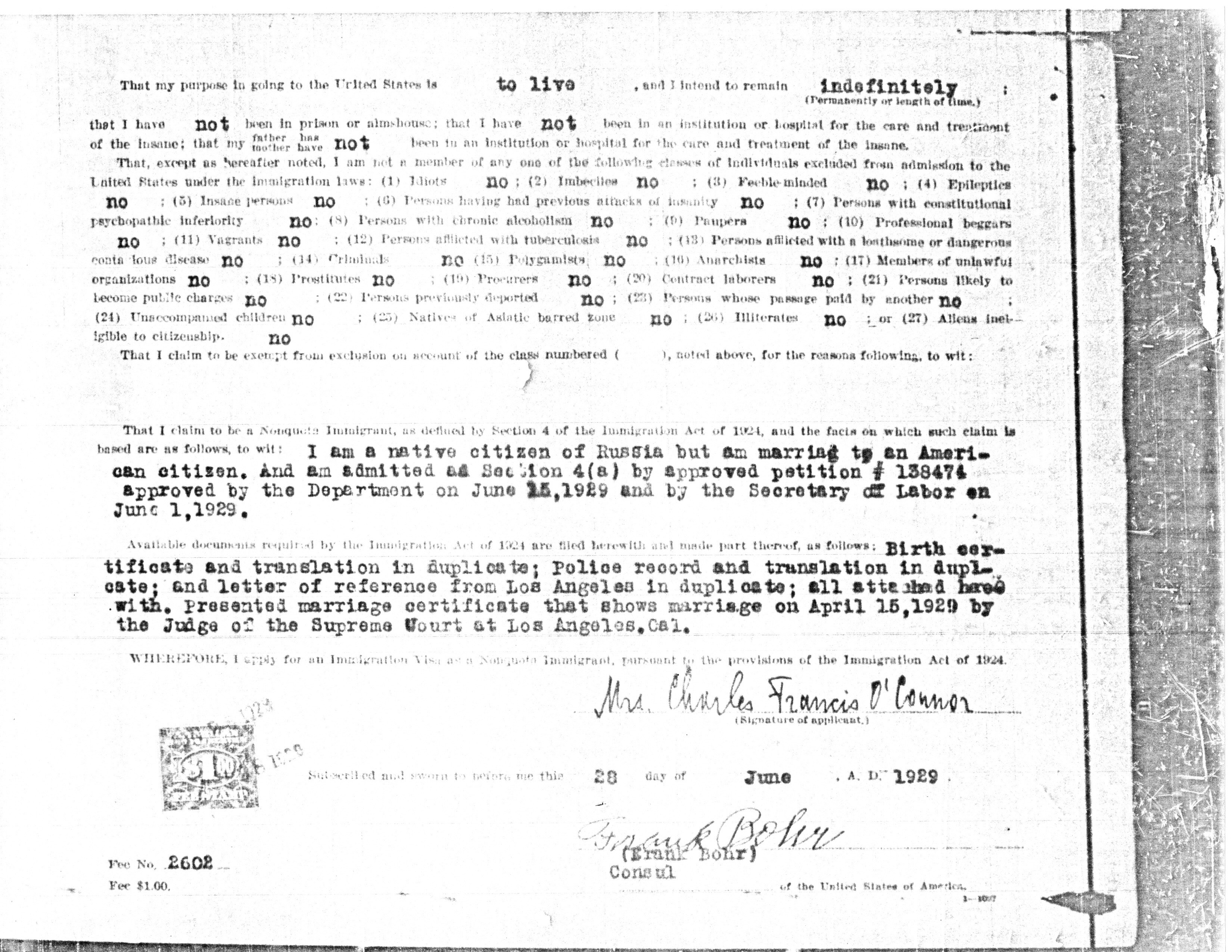
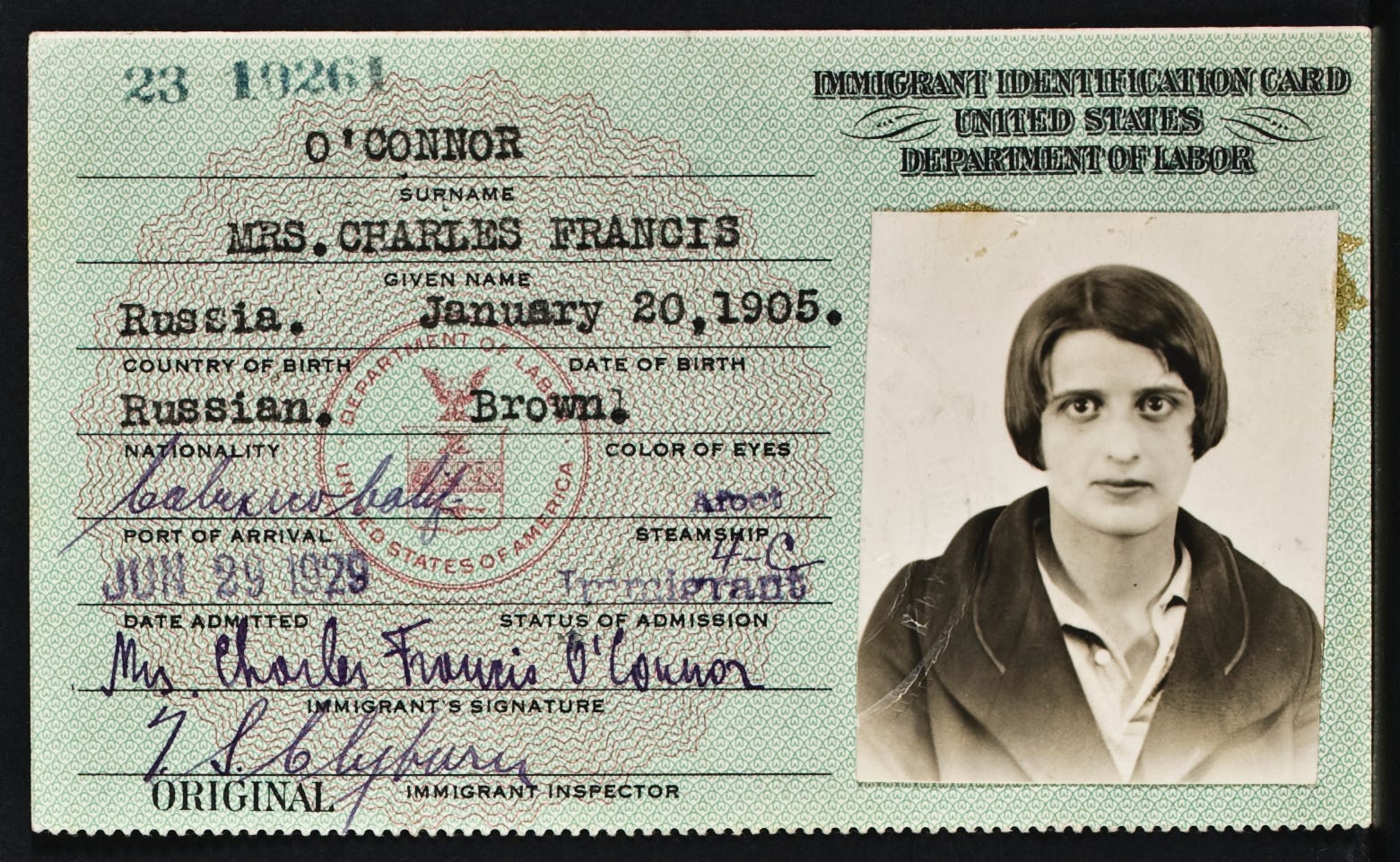
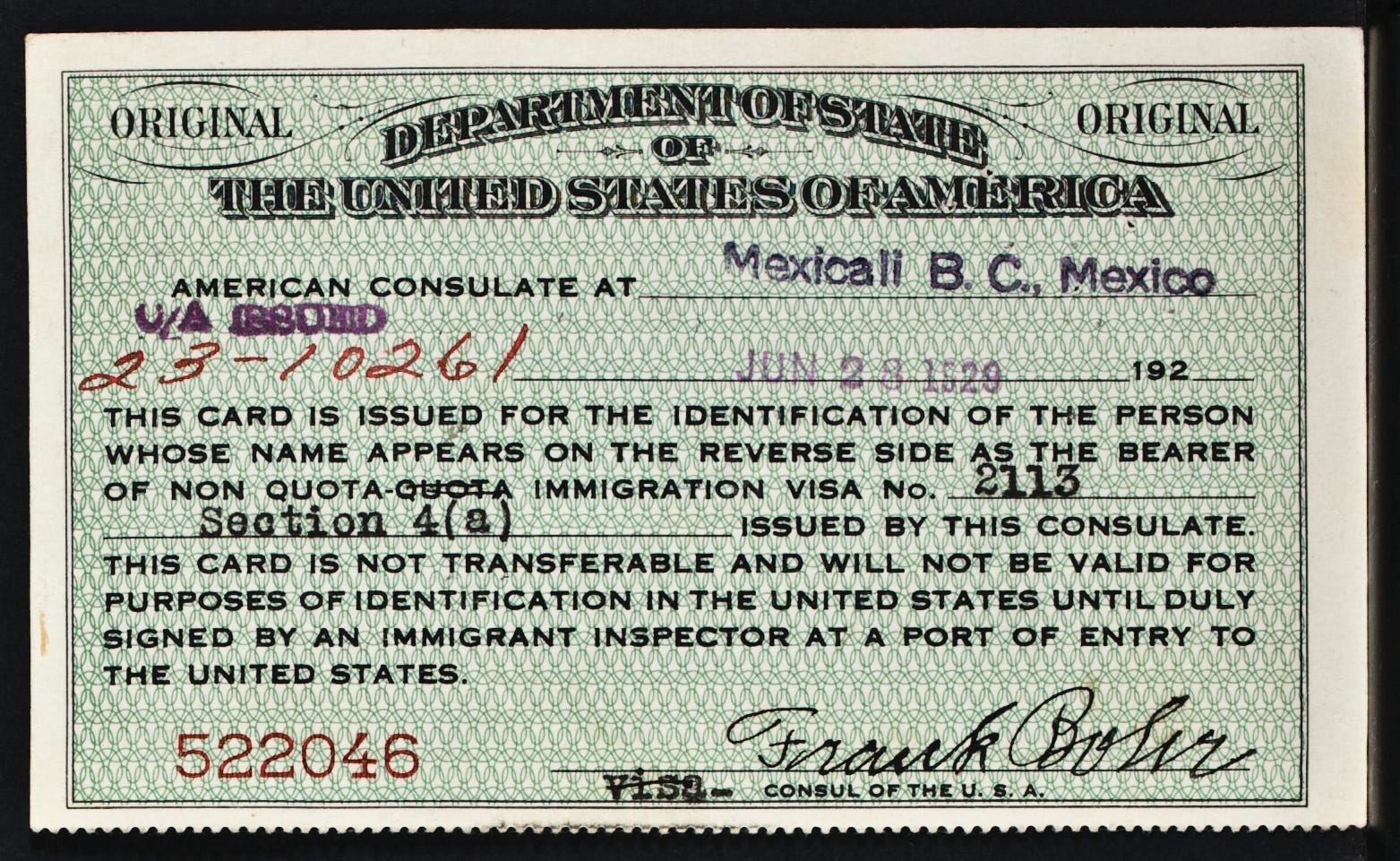
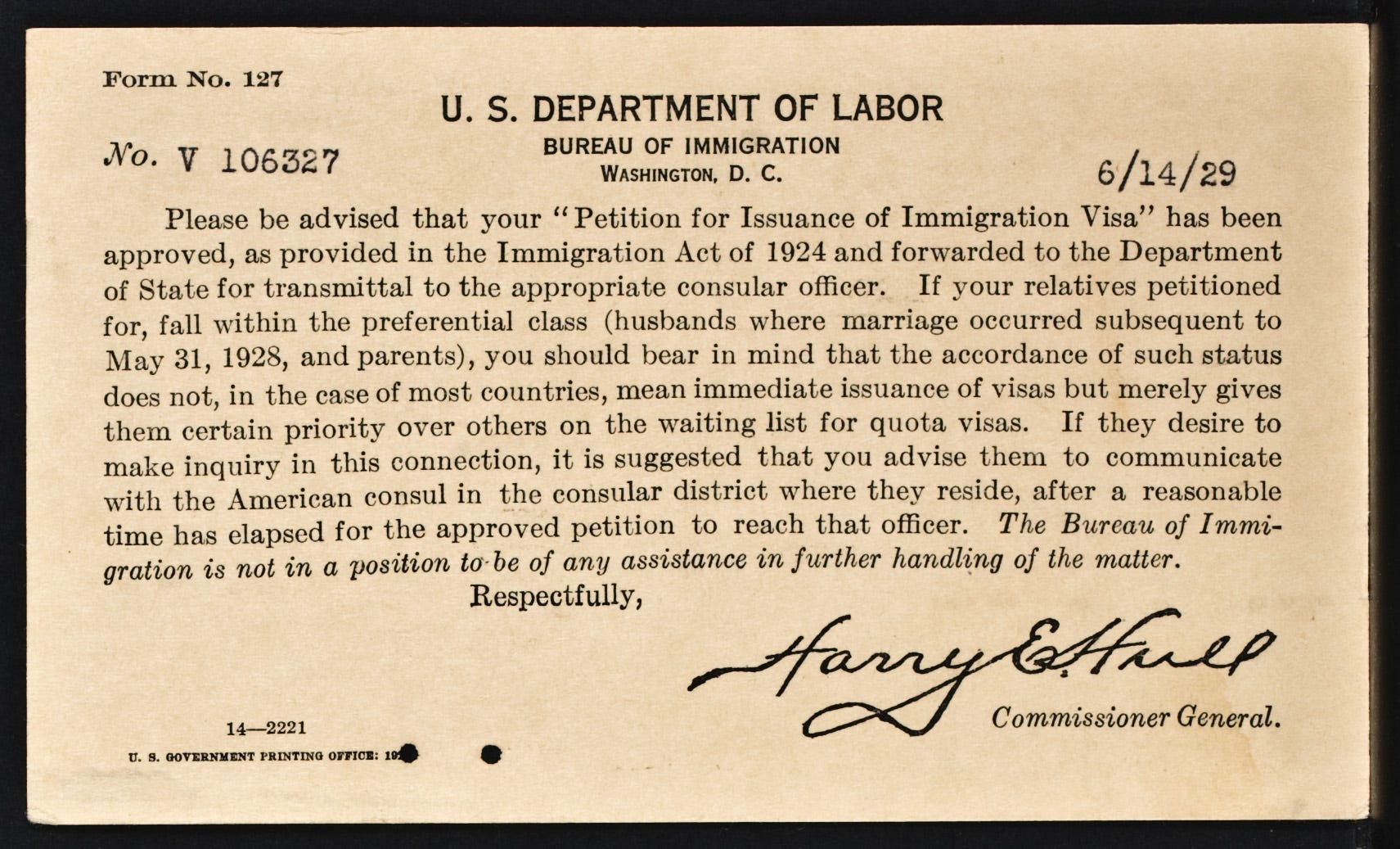
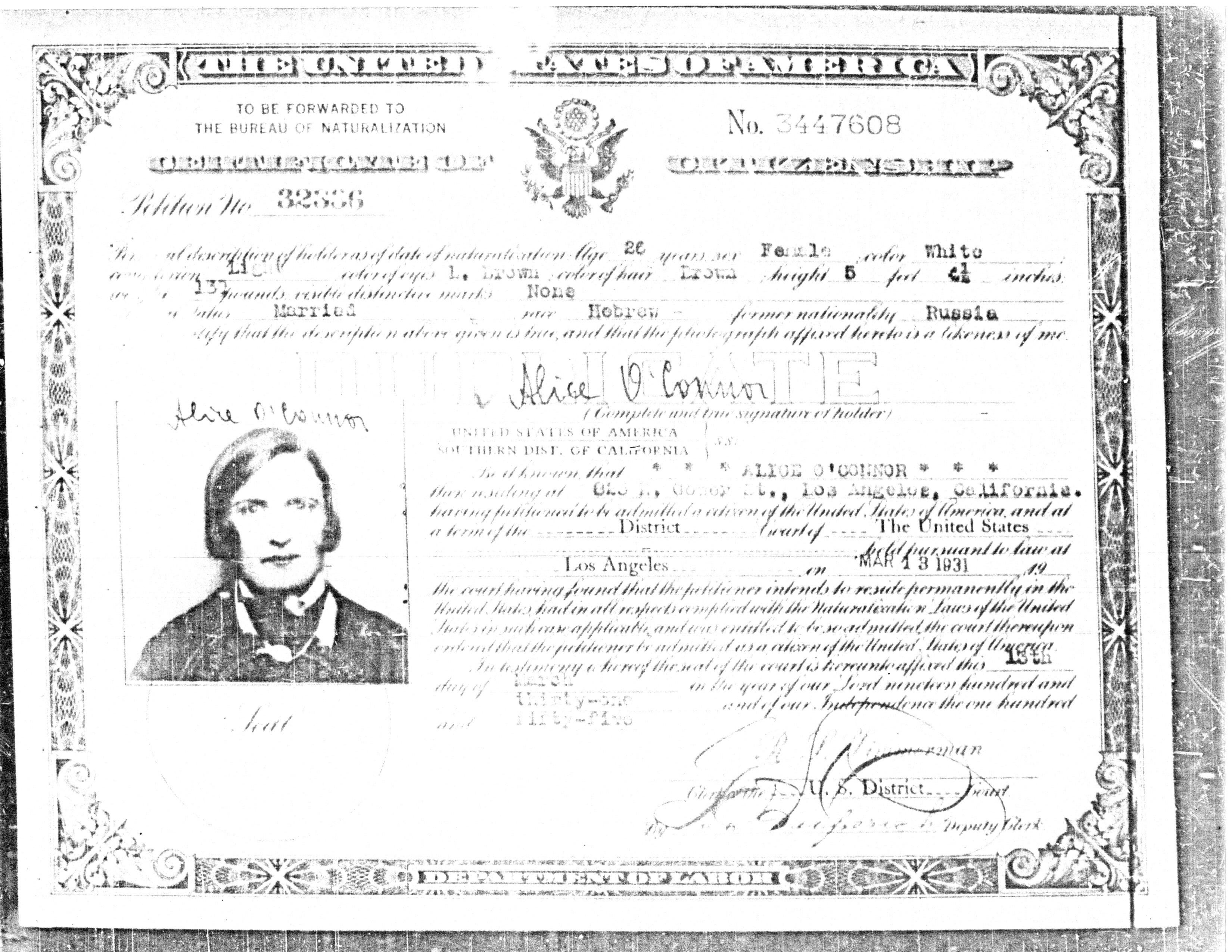
In 1931, at twenty-six years old, Rand became a U.S. citizen. In her petition for citizenship, filed in the District Court of the United States at Los Angeles, California, she listed her last foreign home as Petrograd, Russia, and that she entered as a legal permanent resident through Calexico, California.87
The affidavit of witnesses, signed by Dorothy Carter (whose identity we haven’t been able to ascertain) and Walter Plunkett (a former boss), stated a few formalities that were nonetheless meaningful and true: that she had behaved as a person of “good moral character,” that she was “attached to the principles of the Constitution of the United States,” and that she was “well disposed to the good order and happiness of the same.”88
A Philosophical Understanding of America
Rand’s naturalization in 1931 would formalize her status as an American. As a novelist and philosopher, she would go on to develop a deep understanding of the view that attracted her to America: that it was an exceptional country.
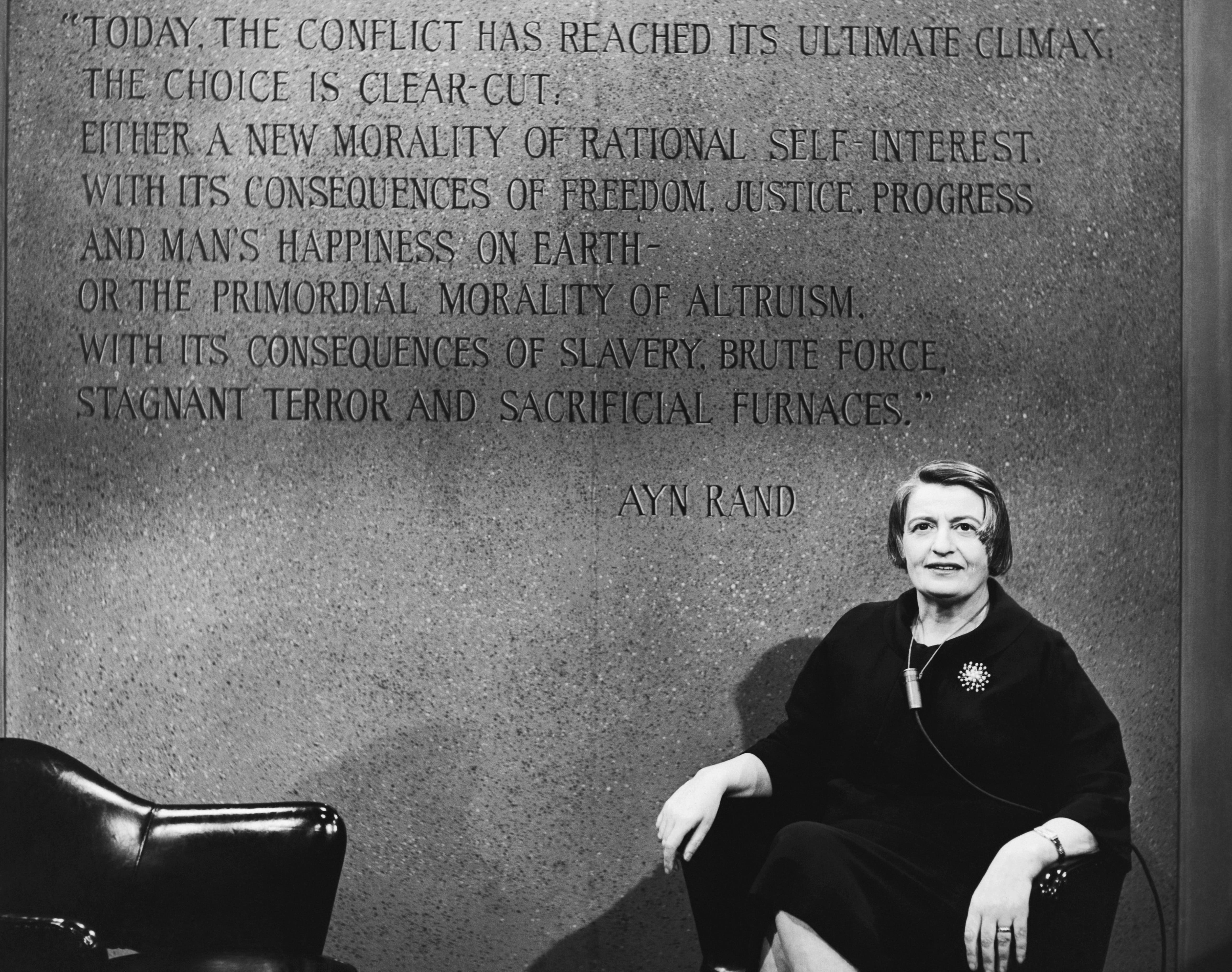
America was unique and moral, Rand explained in a 1973 essay, because it was the first country to see man as an individual, not as a member of a collective:
America’s founding ideal was the principle of individual rights. Nothing more — and nothing less. The rest — everything that America achieved, everything she became, everything “noble and just,” and heroic, and great, and unprecedented in human history — was the logical consequence of fidelity to that one principle.89
More than any other philosopher, Rand saw the wide-reaching implications of the individualism that America had achieved. Precisely because of this, she was critical of the instances when the country didn’t live up to it. She was a fierce critic of American politics, criticizing legislation, politicians, intellectuals, and other public figures who didn’t honor America’s promise of protecting individual rights.
Notably, Rand left Soviet Russia to escape communism, only to see it starting to take hold in America. She witnessed the growing popularity of communism in intellectual circles during the “Red Decade.” In 1936, she published We the Living, her semiautobiographical account of life in Soviet Russia. She was a vocal anticommunist, even testifying before Congress on communist influence in the film industry.
Rand also opposed policies enacted by “liberal” American politicians who shared the collectivistic premises of the communists. She denounced President Roosevelt’s New Deal and even condemned President Kennedy’s signature New Frontier program as fascistic, as it implied the “subordination and sacrifice of the individual to the collective,” in stark contrast to the values this country was founded on.90
Despite her popularity in conservative circles, Rand criticized conservatives too. As an advocate of the secular Constitution and an atheist, she denounced conservatives’ injection of religion into politics. She denounced, among other things, their unprincipled defense of capitalism stemming from their reliance on the moral premises of religion.
Overall, Rand saw much of America’s politics as antithetical to its founding principles. She valued America profoundly — and that’s why she fought to defend the essence of what made it the place she admired from afar, and what allowed her the freedom to pursue her ambition. She openly and persuasively pushed this country to live up to (and improve on) its founding principles and understood that, if America continued to deviate from these principles, it would fall victim to authoritarianism.
A Quintessential American Story
Despite being Russian-born, Ayn Rand was profoundly American. She deliberately chose this country — above other options — because she revered its founding principles.
Her immigration story speaks of Rand’s commitment to her own happiness, her determination, and her deep appreciation of America. It is the story of a woman who would not settle for the mediocre or the “good enough” but valued her own life enough to seek the best, even if it took her away from home and meant starting her life over again in a foreign land.
Her belief that she would thrive in the freedom America offered was proven right — she achieved immense success. Through her time working to become an American citizen, she refined her craft of writing, which would pay off greatly in the ensuing decades. Through the lean years of the Great Depression, she took jobs in the film industry and kept writing when she could, treating each new project as another step toward the career she had crossed an ocean to build.
That long climb began to yield tangible results in 1932 when Rand sold her first screenplay, “Red Pawn,” to Universal Studios. Afterward, Rand sent DeMille a synopsis of the film along with a letter of gratitude, recalling that when he first helped her, she had been “a very inexperienced, very bewildered and frightened little immigrant from Russia.”91
In the years that followed, Rand published her first novel, We the Living, and found success on Broadway with her play Night of January 16th.92 But it was the nationwide success of her second novel, The Fountainhead, that transformed her from a struggling immigrant into a nationally recognized author — followed by Atlas Shrugged in 1957, one of the most widely read and debated novels of the twentieth century. Her philosophical and literary work continues to inspire readers to this day.
Rand’s journey is also the story of America’s fraught relationship with immigration. A productive, ambitious individual like Rand ended up having to work illegally to pursue her aspirations, like millions of other individuals who are American in every way but on paper. But this is also the story of America’s power to attract — by means of its basic values — an ambitious mind from more than five thousand miles away — a mind that sought the best for itself.
Ultimately, America delivered on its promise to Ayn Rand. In 1926, shortly after arriving, she wrote to a friend in Russia:
As you can see, not only have I reached Riga, I [have] reached further still. The only thing that remains for me is to rise, which I am doing with my characteristic straight-line decisiveness. I hope you will be impressed once more when you hear that I didn’t back down from a much harder path.93
From a Soviet escapee to a waitress to one of the most famous and influential writers and philosophers in American history, Rand rose thanks to her own ambition, intelligence, hard work, and the freedom of a country that was hospitable to people like her.
Barbara Branden, “Who Is Ayn Rand?,” in Who Is Ayn Rand?, ed. Nathaniel Branden (New York: Random House, 1962), 199.
Ayn Rand, Philosophy: Who Needs It (New York: Signet, 1984), 10.
Rand’s sister Natasha refers to her as “Lil Rand” in a letter dated February 26, 1926 (Natasha Rosenbaum to Ayn Rand, letter, February 26, 1926, 062_016_001, Ayn Rand Archives). Over a month later, Rand’s sister Nora addresses her as “Ayn Rand” in a letter dated April 11, 1926. This is the first time the name appears in their documented correspondence (Eleonora Rosenbaum to Ayn Rand, letter, April 11, 1926, 062_024_001, Ayn Rand Archives).
Between December 1960 and May 1961, Ayn Rand recorded approximately forty hours of audio interviews with Barbara and Nathaniel Branden. These interviews were part of the Brandens’ research for the biographical essay published in Who Is Ayn Rand? (1962). The following footnotes cite the page numbers of the unpublished transcript. Factual details drawn from these interviews depend upon the accuracy of Rand’s later recollection. While many such details are likely reliable (especially basic family and biographical facts), memory is fallible. The interviews are not, by themselves, independent documentary corroboration (Ayn Rand, Biographical Interview #1 by Barbara Branden and Nathaniel Branden, December 18, 1960, transcript, 10, Ayn Rand Archives).
Biographical Interview #4, December 28, 1960, 133.
Biographical Interview #4, 134.
Soviet of People’s Commissars, “Abolition of Private Trade,” November 21, 1918, in James Bunyan, ed., Intervention, Civil War, and Communism in Russia, April–December 1918 (Baltimore: The Johns Hopkins Press, 1936), 435–39; Biographical Interview #4, 133–35.
Central Executive Committee, “Decree on Nationalization of Banks,” December 14/27, 1917, trans. Emanuel Aronsberg, Marxists Internet Archive, last modified 2017 ; Biographical Interview #4, 134.
Biographical Interview #2, December 19, 1960, 54; Biographical Interview #4, 139–40; for more on the family’s journey to Crimea, see Brandon Lisi, “‘The Importance of Fiction’: Ayn Rand’s Escape from Petrograd,” New Ideal, October 9, 2024.
Biographical Interview #4, 142–43.
For more on the evolving system of rationing under the “New Economic Policy,” see Paul Ashin, “Wage Policy in the Transition to NEP,” The Russian Review 47, no. 3 (1988): 293–313; for more on political surveillance in the Soviet Union in the early 1920s, see Vladimir Makarov, “Cheka: The First Five Years,” Rodina, December 20, 2025; for a brief overview of university purges in the early history of the Soviet Union, see Sheila Fitzpatrick, “The Bolsheviks’ Dilemma: Class, Culture, and Politics in the Early Soviet Years,” Slavic Review 47, no. 4 (1988): 599–613, 603–04.
Biographical Interview #2, 82, 85.
Ayn Rand, “To the Readers of The Fountainhead,” (Bobbs-Merrill, 1945), 083_24B_005, Ayn Rand Archives.
Biographical Interview #4, 108.
Biographical Interview #7, January 15, 1961, 220.
For more on intellectual and artistic censorship in the Soviet Union during the mid-1920s, see Michael S. Fox, “Glavlit, Censorship and the Problem of Party Policy in Cultural Affairs, 1922–28,” Soviet Studies 44, no. 6 (1992): 1045–68.
Biographical Interview #7, 220.
Biographical Interview #1, December 18, 1960, 48.
Rand referred to England as “the America of my childhood” (Biographical Interview #1, 35); also, it was during a family vacation to England in 1914 that Rand decided to become a fiction writer (Biographical Interview #2, December 19, 1960, 82). For more on how the fictional character Cyrus Paltons, a British officer stationed in colonial India, influenced some of Rand’s characters in her mature fiction, see Shoshana Milgram, “Three Inspirations for the Ideal Man: Cyrus Paltons, Enjolras, and Cyrano de Bergerac,” New Ideal, August 17, 2023; Rand had significantly less to say about Switzerland than England in the biographical interviews, but states that Switzerland was her “idea of heaven,” and that her memories of the family’s trip to Switzerland in 1914 served as the “springboard” for projecting the childhood setting of the fifth chapter of Atlas Shrugged, “The Climax of the d’Anconias” (Biographical Interview #1, 26).
Biographical Interview #1, 35, 38; Biographical Interview #2, 74; Biographical Interview #3, December 1960, 97–98.
Biographical Interview #5, December 30, 1960, 171; Biographical Interview #7, 243
Biographical Interview #1, 35; Biographical Interview #3, 109.
Biographical Interview #1, 35.
Biographical Interview #1, 13.
Biographical Interview #6, January 2, 1961, 207; Ayn Rand, “movie diary notebook,” 168_05x_001, Ayn Rand Archives.
Biographical Interview #6, January 2, 1961, 207.
Biographical Interview #11, February 15, 1961, 354.
Biographical Interview #6, 207; Biographical Interview #8, 252; For more on Rand’s admiration for American film, see Brandon Lisi, “How Cinema Saved Ayn Rand’s Life — and Sparked Her Career,” New Ideal, June 25, 2025.
Biographical Interview #6, 209–15; for more on this early story, see Brandon Lisi, “The Lost Precursor to Atlas Shrugged,” New Ideal, September 2, 2025.
Ayn Rand, “Pola Negri” (Moscow and Leningrad: 1925), 166_17x_002, Ayn Rand Archives. To read the translations of Rand’s earliest published works, see Ayn Rand, Russian Writings on Hollywood, ed. Michael S. Berliner, trans. Dina Schein Federman (Ayn Rand Institute Press, 1999).
Biographical Interview #7, 239–40.
Biographical Interview #7, 239.
Biographical Interview #1, 15; Biographical Interview #7, 239.
Anna Rosenbaum to Ayn Rand, letter, ca. January 18, 1926, 062_005_001, Ayn Rand Archives; Ayn Rand, “List of amounts (and dates) of money sent to her by her parents,” December 13, 1932–May 15, 1935,” 136_01B_005, Ayn Rand Archives.
The nickname “American resident” appears throughout Rand’s documented correspondence with her family, first appearing in a letter dated March 12, 1926 (Eleonora Rosenbaum to Ayn Rand, letter, March 12, 1926, 062_19C_001, Ayn Rand Archives); the correspondence also contains many mentions of their cat “Los Angeles,” nicknamed “Lossy,” first named in a letter approximately dated January 20, 1926 (Eleonora Rosenbaum to Ayn Rand, letter, ca. January 20, 1926, 062_007_001, Ayn Rand Archives).
Biographical Interview #7, 239.
Biographical Interview #6, 189; Biographical Interview #7, 239–40.
Harry Portnoy, affidavit inviting Ayn Rand to America, June 29, 1925, 166_02x_008, Ayn Rand Archives; Biographical Interview #7, 239–40.
Soviet passport issued to Alisa Rosenbaum, October 29, 1925, 168_06x_002, Ayn Rand Archives; Biographical Interview #7, 240.
B. Branden, Who is Ayn Rand?, 171.
Biographical Interview #6, 220, Biographical Interview #7, 240.
Biographical Interview #6, 220.
Biographical Interview #7, 240–41.
Rand’s mother states that the day of Rand’s departure was January 17, 1926 (Anna Borisovna Rosenbaum to Ayn Rand, letter, February 21, 1926, 062_015_001, Ayn Rand Archives).
Anna Rosenbaum to Ayn Rand, February 21, 1926.
Anna Rosenbaum to Ayn Rand, February 21, 1926.
Immigration Act of 1924 (Johnson-Reed Act), Pub. L. No. 68-139, §§ 4, 11(a), 43 Stat. 153 (1924).
Immigration Act of 1924, § 2.
Asgar M. Asgarov, “Reporting from the Frontlines of the First Cold War: American Diplomatic Despatches about the Internal Conditions in the Soviet Union, 1917–1933” (PhD diss., University of Maryland, College Park, 2007), 2; Biographical Interview #7, 241.
Migration Policy Institute, “The 1924 U.S. Immigration Act: History and Impact,” Migration Policy Institute, accessed February 10, 2026; Immigration Act of 1924 (Johnson-Reed Act), Pub. L. No. 68-139, §§ 2, 9, 13, 43 Stat. 153 (1924)
Although Rand stated that she visited the U.S. “consulate” in Riga, she likely meant to say “embassy,” as the consulate in Riga had been upgraded to embassy status in 1922 (Asgarov, “Reporting from the Frontlines of the First Cold War,” 2). Because the letters Rand sent to her family are lost, one has to rely on contextual evidence from the letters Rand received to accurately date these events. Wednesday January 27, 1926, is the estimated date of Rand’s interview with the American embassy, based on the following clues: Anna Borisovna says that she received a letter from Rand from Moscow on “Thursday evening” (January 21) (Anna Rosenbaum to Ayn Rand, letter, ca. January 23, 1926, 062_009_001, Ayn Rand Archives). In a later letter, Anna describes a gap of “a week or eight days” between the Moscow letter and Rand’s letter in which she describes her interview at the embassy in Riga (Anna Rosenbaum to Ayn Rand, February 21, 1926). If Rand’s family received the letter from Riga on January 29, one can presume that Rand sent it about two days earlier, possibly on January 27.
Biographical Interview #7, 241–42.
Biographical Interview #7, 242.
Reflecting years later, Rand stated that given the circumstances, she did not consider this an act of dishonesty. (Biographical Interview #7, 242). In her distinctive ethical view, honesty is not simply a proscription against telling lies, but a deeper commitment to reality in all of one’s choices. It is “recognition of the fact that the unreal is unreal and can have no value … The virtue of honesty is “not a social duty, not a sacrifice for the sake of others, but the most profoundly selfish virtue man can practice: his refusal to sacrifice the reality of his own existence to the deluded consciousness of others.” (Ayn Rand, Atlas Shrugged (New York: Random House, 1957), 1019) In ordinary contexts, this means telling the truth, because human beings do not create values through dependence on the ignorance or stupidity of others. But since it is not a self-sacrificial virtue, it does not demand telling the truth to those who would use personal information in the attempt to destroy your values, especially anyone threatening the initiation of force (e.g. agents of the Soviet Union’s a dictatorial regime; or embassy officials wielding capricious power as in Rand’s story).
Biographical Interview #7, 242.
Biographical Interview #7, 242–43.
For more on Ayn Rand’s time spent in Berlin, see “Birthday in Berlin: Ayn Rand’s Journey to America,” YouTube video, Ayn Rand Institute, February 2, 2026.
Anna Rosenbaum to Ayn Rand, February 21, 1926.
Biographical Interview #7, 248.
Charles Sures and Mary Ann Sures, “Facets of Ayn Rand (Part 6),” New Ideal, July 6, 2022, originally published in Facets of Ayn Rand (Ayn Rand Institute Press, 2001).
Biographical Interview #1, 13.
Biographical Interview #1, 13.
Anna Rosenbaum to Ayn Rand, February 21, 1926.
Anna Rosenbaum to Ayn Rand, ca. January 23, 1926.
Biographical Interview #8, 250.
September 3, 1926, is the estimated date of Rand’s arrival based on the fact that Rand’s studio pass for DeMille Pictures Corporation is dated September 4, 1926 (studio pass, September 4, 1926, 166_10x_003, Ayn Rand Archives). Rand says that she received this pass on her “second day, after my arrival” (Biographical Interview #8, 252)
Biographical Interview #8, 251.
Ayn Rand, “movie diary notebook,” Biographical Interview #8, 252.
Biographical Interview #8, 253–54.
Biographical Interview #8, 254.
Biographical Interview #8, 254–55.
For more on one notable example of a film scenario Rand wrote for DeMille, see Brandon Lisi, “Ayn Rand and The Skyscraper,” New Ideal, April 17, 2024.
Biographical Interview #5, 165.
Biographical Interview #5, 165.
Biographical Interview #5, 163-64.
Biographical Interview #5, 162–64.
Biographical Interview #5, 162–63.
Biographical Interview #5,163.
The regulations at the time stated that: “in no instance. . . shall the stay of an alien, admitted for a temporary visit, be extended by the officer in charge of the port of entry for a period in excess of one year from the date of original entry.” The regulation also states that, for a period longer than one year or if there are other issues with the application, the application would be forwarded to the district head for determination, with a potential for the request of a bond. Extensions beyond two years would go to the central office, triggering a lengthier process. Extension applications were exceptional, per the letter of the regulation.
Given these restrictions, and based on the spirit of the law to limit visitors’ time in America, the historical context (visitors from Soviet Russia were looked at with skepticism by American authorities), it is unlikely Rand was granted many renewals for a total of three years. (United States Department of Commerce and Labor, Bureau of Immigration and Naturalization, Immigration Laws, 1924–1925, 1927, 1930 + Amendments (Washington, DC: United States Government Printing Office, 1937), 191, par. 3, HathiTrust Digital Library.
For more on Rand’s view of immigration laws, see Ayn Rand, “Censorship: Local and Express,” Q&A, Ford Hall Forum, October 21, 1973.
Biographical Interview #5, 164.
Biographical Interview #5, 164.
Biographical Interview #5, 164.
Biographical Interview #5, 164.
“Application for Immigration Visa (Nonquota),” (Mexicali, Mexico), June 29, 1929, Special Collections 01-03-01, Ayn Rand Archives.
“Application for Immigration Visa (Nonquota),” June 29, 1929.
“Petition for Citizenship,” ca. 1931, Special Collections 1-03-01, Ayn Rand Archives.
“Petition for Citizenship,” ca. 1931.
Ayn Rand, “A Preview,” Ayn Rand Letter 1, no. 24 (1973): 5.
Ayn Rand, “The Fascist New Frontier,” radio broadcast, WKCR, New York, March 12, 1963, originally delivered at the Ford Hall Forum, Boston, December 16, 1962
Ayn Rand to Cecil B. DeMille, letter, July 3, 1934, 100_12C_015, Ayn Rand Archives.
For more on Rand’s challenges during the production of Night of January 16th, see Brandon Lisi, “‘The Most Miserable Experience’ Ayn Rand Ever Had: The Battle over Night of January 16th,” New Ideal, October 8, 2025.
Ayn Rand to Lyolya Bekkerman, letter, August 28, 1926, 166_08x_001, Ayn Rand Archives.
 | A guest post by
|
 | A guest post by
|
Loved reading more about my favorite author’s life. Thank you.
Just waiting for the modern day John Galt to make himself known.
This is class, guys. Rand's pursuit of better and refusal to heel to crap, stifling conditions is inspiring. I also never realised that she had left her family behind.